
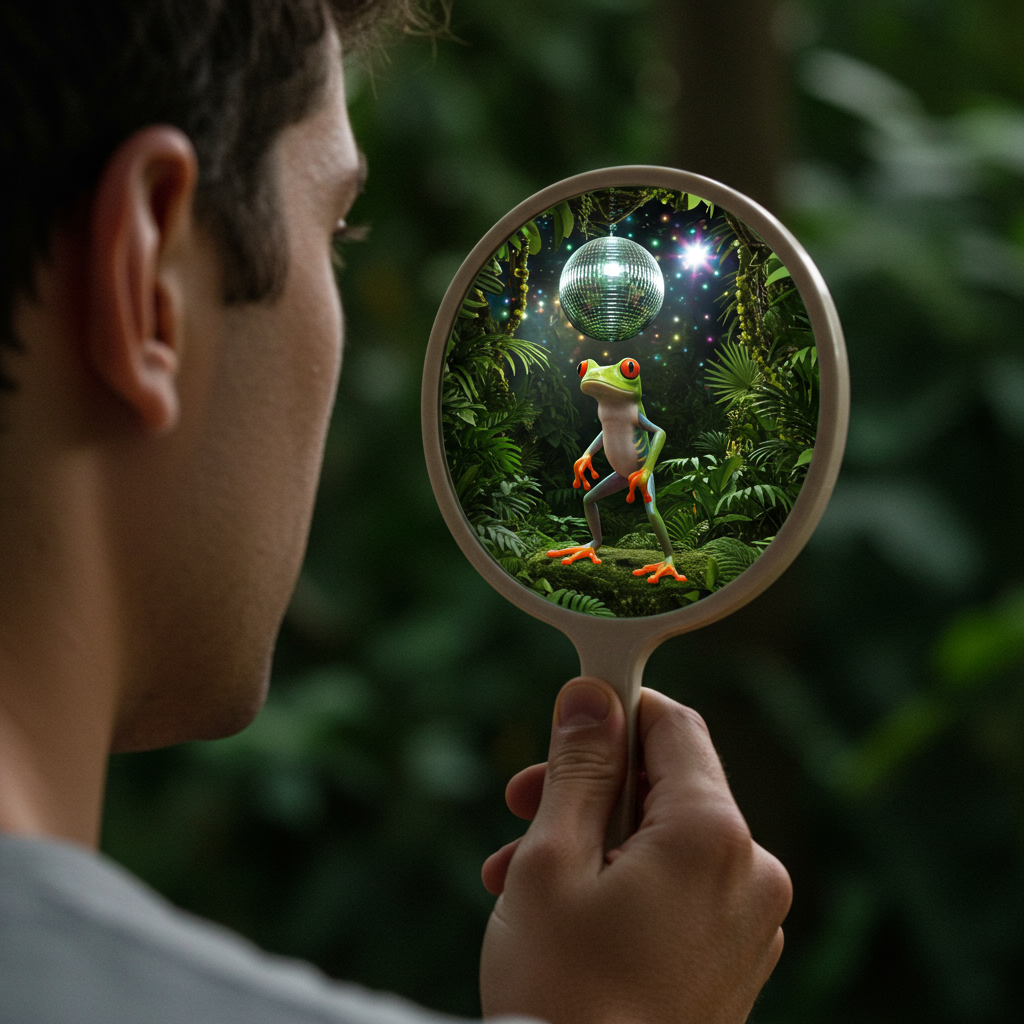
Ever feel like creativity is reserved for artists, musicians, or those quirky tech billionaires? Think again! Turns out, that spark of genius isn’t some rare, inherited trait. It’s a skill, a muscle in your brain, and just like any muscle, you can train it to be stronger, more flexible, and ready to tackle anything from a tricky work problem to figuring out what to make for dinner with only three ingredients.
So, let’s ditch the idea that you need a muse or a sudden bolt of lightning. We’re going to talk about how your brain actually does creativity and some ridiculously simple exercises to get those creative juices flowing.
Your Brain’s Secret Playground: Where Ideas Are Born
Your brain is a fascinating place, and when it comes to creativity, it’s less about one “aha!” spot and more about a whole network of busy little workers. Think of it like a bustling city with different districts.
You’ve got the Default Mode Network (DMN), which is basically your brain’s daydreaming, “autopilot” mode. This is where spontaneous ideas pop up when you’re not even trying – like when you’re showering or staring out the window. It’s fantastic for free-associating and letting your thoughts wander. Then there’s the Executive Control Network (ECN), the brain’s serious, focused manager. This network steps in to evaluate those wild ideas, pick the best ones, and help you actually do something with them.
The magic happens when these two networks play nicely together, shifting from expansive idea-generating to focused idea-refining. It’s like a creative dance: first, you throw all the spaghetti at the wall (DMN), then you pick out the best noodles (ECN).
The Two Sides of the Creative Coin: Divergent and Convergent Thinking
Creativity isn’t just about coming up with a gazillion ideas; it’s also about picking the right one. This is where Divergent Thinking and Convergent Thinking come in.
-
Divergent Thinking: This is your “idea explosion” mode. It’s about generating as many unique, varied, and detailed ideas as possible for an open-ended problem. Think “thinking outside the box” – or even “thinking like there is no box!”
-
Convergent Thinking: This is your “idea filter” mode. It’s about taking all those brilliant (and maybe not-so-brilliant) ideas and narrowing them down to the single best, most practical solution. This is where logic and deduction shine.
True creative mastery comes from being good at both: generating a ton of options and knowing how to pick the winner.
Fun & Easy Exercises to Get Your Brain Buzzing
Ready to give your creative muscle a workout? Here are some simple, evidence-based exercises you can try today:
-
The “Alternative Uses” Game: Grab a common object – say, a paperclip. Now, set a timer for two minutes and list as many unusual uses for it as you can. A tiny back scratcher for ants? A makeshift lock pick for a dollhouse? The sillier, the better! This exercise forces your brain to break free from its usual thinking patterns and come up with truly original ideas.
-
The 30 Circles Challenge: Draw 30 blank circles on a piece of paper. Now, in just three minutes, turn as many of them as possible into recognizable objects. A sun, a pizza, a basketball – go wild! The goal is quantity and speed, not perfection. This helps you bypass your inner critic and get into a playful, experimental mindset.
-
Brainstorming (with a Twist!): You know brainstorming – throw out all ideas, no judgment. But here’s the twist: try Brainwriting. Instead of shouting ideas out loud, everyone silently writes their ideas down on paper, then passes them around for others to read and build upon. This is great for introverts and ensures everyone’s ideas get a fair shot, leading to more ideas overall.
-
Random Word Fusion: Pick a completely random word (seriously, open a dictionary and point!). Now, try to force a connection between that random word and a problem you’re trying to solve. For example, if your problem is “how to make my morning commute less stressful” and your random word is “octopus,” you might think about how an octopus moves fluidly, or how it has many arms to multitask. This forces your brain to make unexpected connections, often leading to surprisingly fresh ideas.
-
Assumption Reversal (The “Opposite Day” for Problems): List all the assumptions you have about a problem. Then, reverse them! If you’re trying to improve a restaurant, and an assumption is “restaurants have menus,” reverse it to “restaurants have no menus.” Now, how would that work? This technique challenges your ingrained beliefs and can reveal hidden solutions.
-
SCAMPER Method: This is a systematic way to tweak existing ideas. SCAMPER stands for:
-
Substitute: What can you replace?
-
Combine: What can you merge?
-
Adapt: What works elsewhere that could apply here?
-
Modify: How can you change its form or function?
-
Put to another use: Can it be used differently?
-
Eliminate: What can you remove or simplify?
-
Reverse: What if you flipped it or reordered it? This framework helps you systematically explore every angle of an idea, making sure you don’t miss any innovative possibilities.
-
Making Creativity a Daily Habit (No Pressure!)
The best part? You don’t need hours of dedicated “creative time.” Small, consistent efforts are far more effective than sporadic bursts.
-
Start Small: Commit to just 5-10 minutes a day. A quick freewriting session (just write whatever comes to mind without stopping or editing) , a short walk without your phone , or even using your non-dominant hand for simple tasks like brushing your teeth can wake up your brain.
-
Be Consistent: Like going to the gym, showing up regularly makes a difference. Try a 30-day challenge to solidify a new creative habit.
-
Embrace “Failure”: Not every idea will be a masterpiece, and that’s perfectly fine! View “mistakes” as learning opportunities. Creativity thrives on experimentation, not perfection.
-
Broaden Your Horizons: Read widely, explore new places, talk to people outside your usual circle. The more diverse information your brain has, the more unique connections it can make.
-
Get Some Zzz’s: Seriously, sleep is a creative superpower. Your brain does a lot of its best problem-solving and idea-connecting while you’re dreaming.
So, go forth and be creative! Your brain is ready for it, and the world could always use a few more brilliant (and maybe a little quirky) ideas.